
AC Installation in the USA
USA HVAC Pros replaces aging air conditioning systems by first confirming the existing ductwork can support new airflow rates. Our technicians calculate the home cooling load based on square footage, insulation levels, and window orientation before selecting equipment that matches those numbers exactly. Proper sizing prevents short cycling that wears out compressors early and raises humidity inside the house.
During every AC Installation our crews pull the old condensing unit and indoor coil together so the refrigerant circuit stays sealed. They then install a new liquid line drier, adjust superheat and subcooling settings with manifold gauges, and verify the thermostat communicates correctly with the new control board before leaving the site. Anyone needing ac installation should begin at the USA HVAC Pros homepage which covers HVAC needs throughout the USA.
Signs Your Air Conditioner Needs Replacement
- R22 refrigerant no longer available for repairs
- Compressor starts and stops every few minutes
- Monthly electric bills keep rising without use changes
- Indoor coil shows repeated freeze-ups in summer
- Home stays warmer than thermostat setting on hot days
Site Preparation Steps
Our technicians begin by shutting off the main breaker to the outdoor unit and indoor air handler. They then remove the old line set insulation and check the concrete pad for level before placing the new condensing unit. Any damaged low-voltage wiring gets replaced at this stage to avoid future control issues.
Next they measure the return and supply duct openings to confirm the new evaporator coil cabinet will fit without adapters. If the plenum needs modification they cut and seal the sheet metal so static pressure stays within design limits. All condensate drains receive new traps and are tested for flow before the equipment is set in place.
Equipment and Material Choices
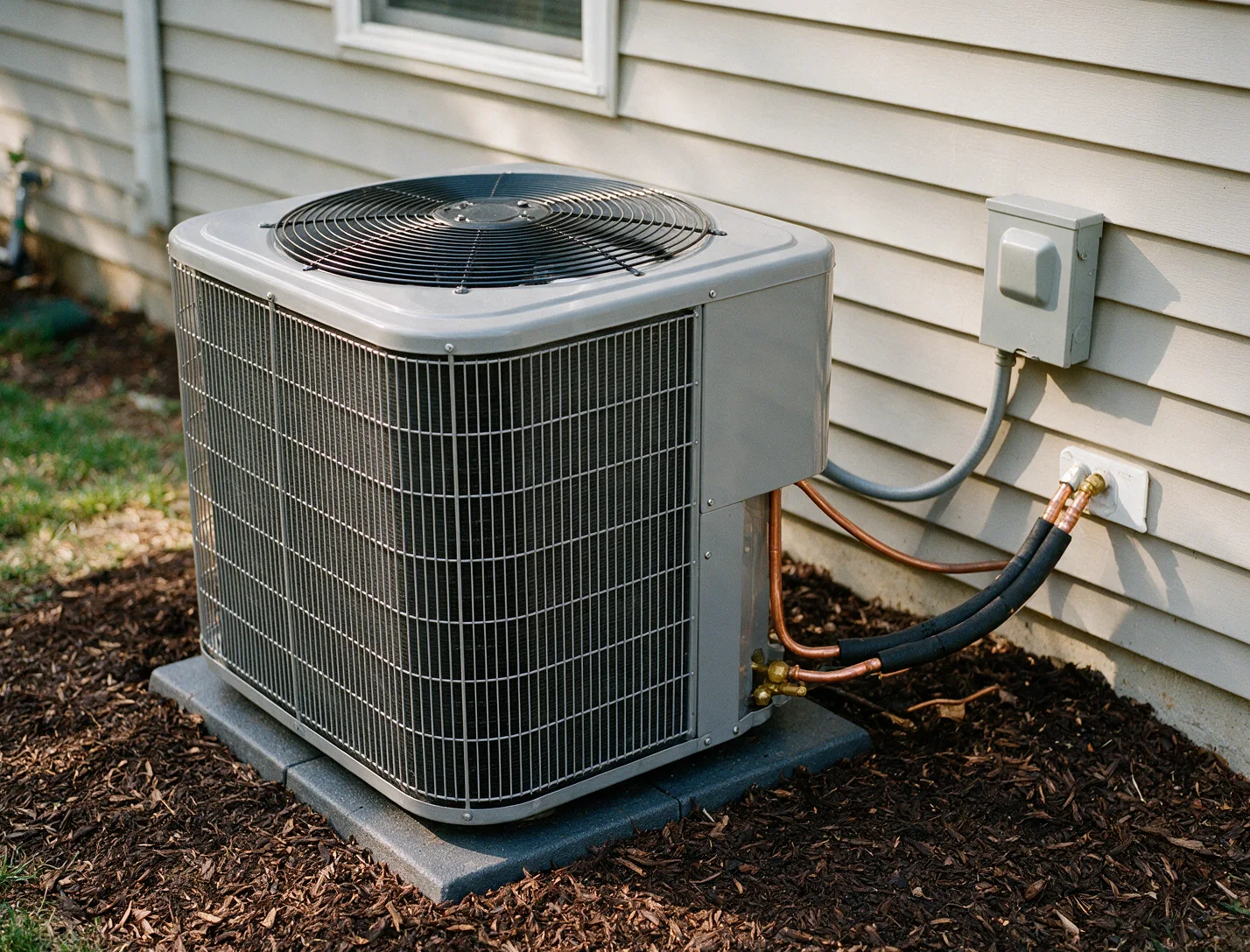
USA HVAC Pros stocks SEER2 rated units that match common residential load sizes. The new evaporator coil is matched to the condenser to maintain the correct expansion valve settings. Copper line sets are chosen in the proper diameter to keep velocity within the manufacturer range and prevent oil return problems.
Electrical work includes a new disconnect box sized for the unit amperage and a fresh whip with the correct gauge wire. Thermostat wire is run in 18/8 cable so future zoning or communicating controls can be added without pulling new lines. All insulation on suction lines uses closed-cell foam at least three-quarter inch thick.
Installation Sequence
After the new equipment is positioned the technicians braze the line set connections while flowing nitrogen through the pipes to prevent oxidation inside the tubing. They then pressure test the entire circuit with nitrogen to 450 psi and hold for 30 minutes before pulling a triple evacuation to 500 microns or lower.
Refrigerant is weighed in according to the factory charge plus any additional ounces required for the line set length. The blower motor is checked for proper speed taps or variable settings that deliver the design airflow. Finally the thermostat is programmed for the correct staging and fan operation.
Final Checks and Handover
Our technicians record supply and return temperatures along with amperage draws on both the compressor and blower. They verify the condensate pump or gravity drain clears water without overflow and that all panels are secured with screws. Any debris from the work is removed from the work area before departure.
Homeowners receive instruction on the new thermostat functions and are shown where the filter access is located. The system is left running so the homeowner can confirm cooling output before the crew departs the property.
AC Installation questions
How long does a typical AC Installation take?
Most residential replacements are finished in one workday when the ductwork and electrical service do not require changes. Our technicians start early, remove the old equipment, install the new matched system, and complete all pressure and vacuum tests before restoring power.
What size unit will I need for my home?
USA HVAC Pros performs a Manual J load calculation that accounts for insulation, windows, and local climate data. The resulting tonnage determines the exact model selected so the system runs long enough each cycle to control humidity without short cycling.
Can the existing ductwork be reused?
Technicians inspect duct joints, insulation, and sizing first. If leakage is under ten percent and the static pressure matches the new blower capability, the ducts stay. Otherwise sections are sealed or replaced to restore proper airflow before the new equipment is started.
Do I need to be home during the work?
Someone must provide initial access and be present for the final walkthrough and thermostat demonstration. Our technicians can work with the power off in most areas so daily routines are not heavily disrupted once the initial inspection is complete.
Schedule Your AC Installation
Contact USA HVAC Pros to measure your home and install a properly sized cooling system that matches your ductwork and electrical service.