Furnace Repair in the USA
When a furnace stops producing heat the first step is confirming the thermostat setting and replacing the air filter if it is clogged with dust. These two actions often restore operation before further diagnosis begins. USA HVAC Pros technicians arrive with combustion analyzers and manometers to measure gas pressure at the manifold and check voltage at the control board.
Cracks in the heat exchanger allow combustion gases into the airstream and trigger limit switches that shut the unit down. Our technicians pull the blower assembly to inspect the exchanger surfaces with mirrors and lights while checking the flame sensor for carbon buildup that prevents reliable ignition. Our technicians handle furnace repair calls nationwide and direct visitors to the USA HVAC Pros homepage for details.
Warning Signs of Furnace Trouble
- Blower runs but no warm air reaches the vents
- Furnace shuts off after a few minutes of operation
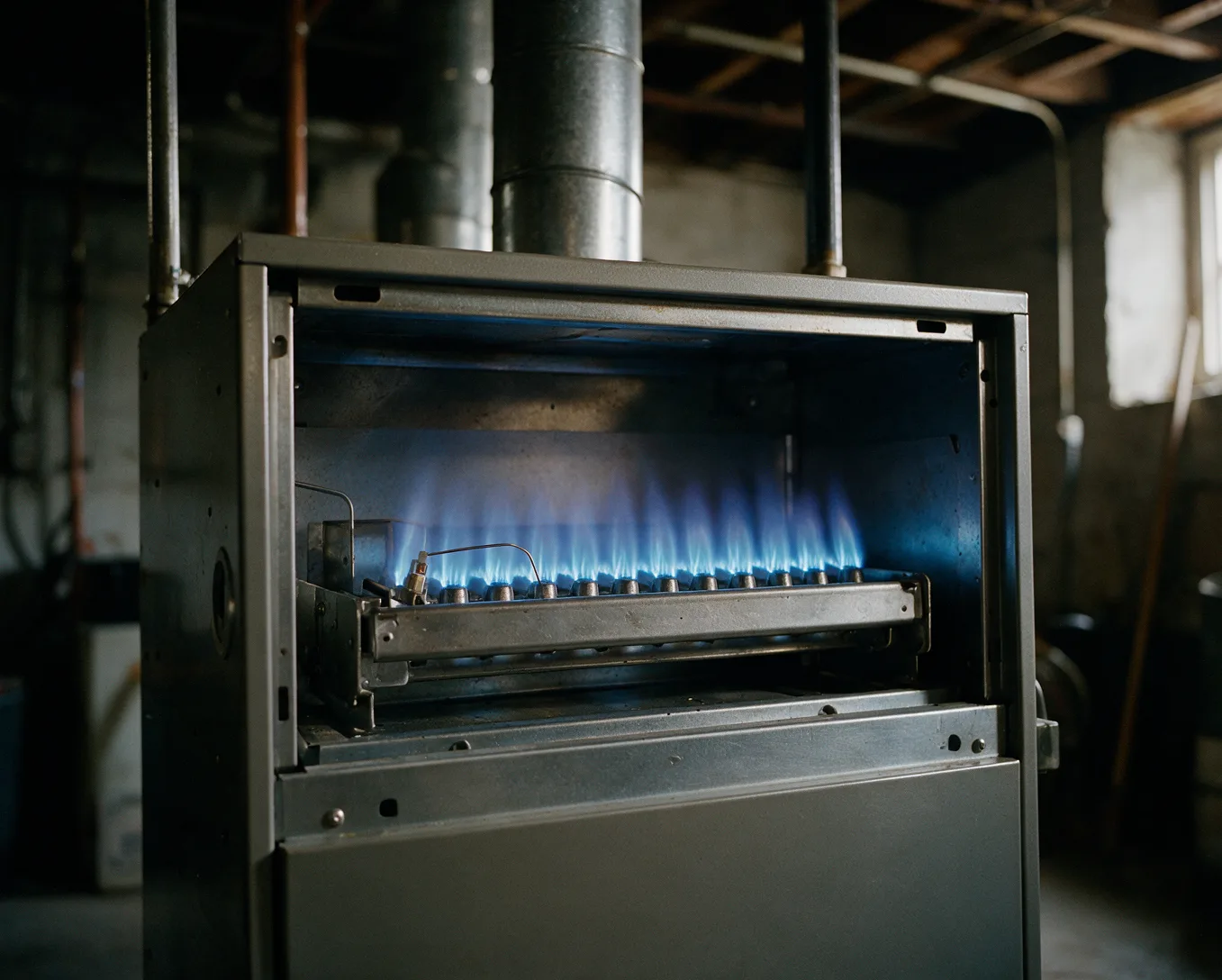
- Yellow flame appears instead of steady blue
- Metallic or burning odors come from the vents
- Thermostat calls for heat yet unit stays silent
Common Causes of Furnace Breakdowns
A failed igniter prevents the gas valve from opening on a call for heat. Technicians test resistance across the igniter terminals and compare readings against manufacturer specifications before deciding on replacement. Weak draft motors can also stop the pressure switch from closing which keeps the sequence from advancing.
Dirty burners produce an unstable flame that trips the flame rollout switch. Our technicians remove each burner and brush carbon deposits then verify orifice alignment so gas flows evenly across the burner ports.
What Technicians Inspect and Measure
Static pressure in the duct system is measured at the supply and return plenums to determine if restricted airflow is overheating the exchanger. High readings point to closed dampers or collapsed flex duct that must be corrected before the furnace can run safely.
Amperage draw on the blower motor and inducer is compared to nameplate values while voltage at the transformer is checked under load. These measurements reveal failing motors or loose wiring that cause intermittent shutdowns.
Repair Options and Parts Used
When the limit switch fails from repeated overheating it is replaced with an exact OEM match to maintain the original temperature settings. Technicians also install new flame sensors and clean the condensate drain on high-efficiency models to prevent water backup that can flood the burner area.
Blower wheels clogged with lint are removed and washed so balanced airflow returns and motor amps drop to normal levels. USA HVAC Pros carries common igniters, pressure switches and gas valves on the truck to complete most repairs in one visit.
What Homeowners Should Do First
Turn the thermostat to heat mode and raise the setting five degrees above room temperature then listen for the inducer motor starting. If the inducer runs but the main burner does not ignite note the number of flashes on the control board LED and report it when calling.
Check that all supply registers are open and that furniture or rugs are not blocking return grilles. These steps eliminate simple airflow restrictions before technicians arrive to perform deeper electrical and combustion testing.
Furnace Repair questions
Why does my furnace short cycle?
Short cycling often results from a dirty air filter restricting airflow or a faulty limit switch that opens too early. Technicians measure temperature rise across the heat exchanger and test switch continuity to identify the exact cause before replacing parts.
What does a yellow burner flame indicate?
A yellow flame shows incomplete combustion caused by dirty burners or incorrect gas pressure. USA HVAC Pros technicians adjust manifold pressure with a manometer and clean burner ports until the flame burns steady blue without lifting or rolling out.
Can I replace the igniter myself?
Homeowners can safely swap an igniter after turning off power and gas but must handle the new part by the ceramic base to avoid oil from skin damaging the element. Technicians verify the new igniter resistance matches specifications after installation.
How often should furnace filters be changed?
Standard fiberglass filters need replacement every thirty days during heating season while pleated media filters last up to ninety days. A clogged filter raises static pressure and causes the heat exchanger to overheat which shortens equipment life.
Schedule Furnace Repair
USA HVAC Pros technicians check gas pressure and inspect heat exchangers to restore steady heating performance.