
Indoor Air Quality in the USA
USA HVAC Pros sends technicians to evaluate air circulation and contaminant sources inside homes nationwide. They start by checking return air paths and supply registers for buildup that restricts flow and traps particles. Homeowners can first replace the main air filter if it looks gray or clogged, which often improves airflow before any further steps are taken.
Moisture from showers or cooking that lingers raises humidity and lets spores grow on coils or in ducts. Our technicians measure relative humidity with a meter and look for standing water near the indoor unit. Clearing blocked condensate drains and setting the fan to run longer cycles helps pull excess moisture out before it turns into visible mildew. USA HVAC Pros provides details about indoor air quality and more when you check the homepage from anywhere in the USA.
Warning Signs
- Dust returns quickly on furniture even after regular cleaning and vacuuming
- Musty odors appear when the system starts running after being off
- Family members notice increased sneezing or itchy eyes during heating season
- Visible black spots form around vents or on the indoor coil access panel
- Condensation collects on windows during mild weather when the unit runs
Common Causes
Dirty evaporator coils collect a film of dust and skin cells that then gets blown back into rooms. When the blower runs it carries those particles past the filter and into living areas. Technicians remove the coil cover and clean the fins with a no-rinse solution to restore heat transfer and stop recirculation.
Leaking duct joints in attics or crawl spaces pull in insulation fibers and outside pollen. Sealing those joints with mastic and adding insulation stops the leak path. USA HVAC Pros uses foil tape only on accessible seams and replaces damaged flex runs with rigid pipe where possible.
High indoor humidity above 55 percent lets dust mites and mold thrive inside the system. Lowering the cooling setpoint a couple degrees and running the fan on continuous low speed pulls more moisture across the coil without freezing it.
Technician Inspection Steps
Technicians begin at the air handler by pulling the filter and checking static pressure before and after the blower. They then insert a hygrometer into the return and supply plenums to record temperature split and moisture removal. A particle counter gives a quick count of fine dust levels in each room to locate the worst source.
Next they open the coil cabinet and inspect the drain pan for slime or standing water. UV lights or antimicrobial pads are recommended only after the pan is cleaned and the trap is verified to hold water. Finally they use a borescope inside main trunk lines to spot visible debris or collapsed sections.
Carbon monoxide readings are taken near the furnace and water heater during startup. Elevated levels point to cracked heat exchangers or blocked flues that require immediate shutdown and repair before any air cleaning equipment is installed.
Repair and Upgrade Options
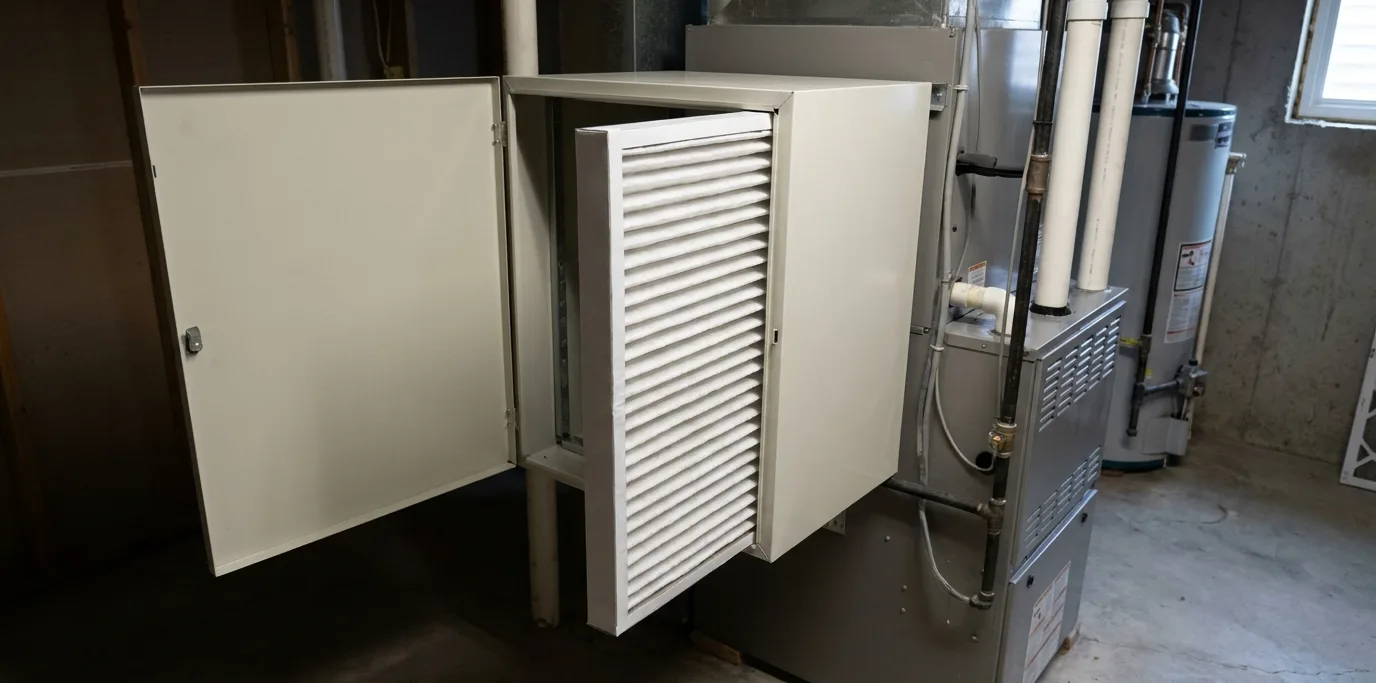
When filters load too fast a media cabinet with MERV 13 cartridges replaces the standard one-inch slot. The larger surface holds more dirt and maintains airflow longer. Technicians size the cabinet to the duct so pressure drop stays within equipment limits.
Whole-home air cleaners that use polarized media or HEPA bypass cabinets are mounted on the return duct. These capture smaller particles than standard filters without forcing the blower to work harder. UV lamps are added downstream of the coil only after the coil itself is cleaned to prevent new growth on the bulb surface.
ERVs or HRVs are installed when homes are tightly sealed and stale air builds up. These units bring in fresh air while transferring heat and moisture so the main HVAC system does not have to condition the incoming load alone.
Homeowner First Actions
Before calling, turn the system to fan-only mode and feel each supply vent for weak airflow. Note which rooms feel stuffier. This information helps technicians focus on the right ducts first. Also check that all interior doors are open so air can return freely to the main return grille.
Write down any recent changes such as new carpet, paint, or cleaning products that coincided with the smell or allergy symptoms. These details guide whether source removal or increased ventilation is the better first step. Keep pets off furniture near returns until the system is checked.
Do not pour bleach into the condensate drain; it can damage the pan coating. Instead use a wet-dry vac on the outside termination to clear obvious clogs and restore proper drainage before the visit.
Indoor Air Quality questions
How often should air filters be changed for better Indoor Air Quality?
Replace the filter every 30 to 60 days during heavy use seasons. A clogged filter forces the blower to pull harder and pushes unfiltered air around the edges. Keep a spare on hand and check it monthly by holding it up to light; if light does not pass through, install a new one.
Will an air purifier fix odors from cooking or pets?
A whole-home unit with activated carbon reduces many odors but does not remove the source. Technicians first locate and seal return leaks that pull in kitchen air. Then they add a carbon section sized to the system airflow so the media lasts longer between changes.
What does a duct cleaning include for Indoor Air Quality?
Technicians attach a vacuum to the main trunk and use rotating brushes on each branch run. They remove loose debris but stop short of damaging flex duct or insulation. After cleaning they seal all access points and check static pressure again to confirm airflow improved.
Can high humidity alone cause poor Indoor Air Quality?
Yes. Humidity above 55 percent allows dust mites and mold to grow on coils, in ducts, and inside wall cavities. USA HVAC Pros measures dew point at the return and supply, then adjusts blower speed or adds a whole-home dehumidifier sized to the latent load of the house.
Schedule Indoor Air Quality Service
Call USA HVAC Pros to have technicians measure your home air and recommend the right filtration or ventilation upgrades.