
Ductwork Repair in the USA
Ductwork carries conditioned air from the furnace or air handler to every room. When seams separate or insulation pulls away, air escapes into attics or crawl spaces and the system runs longer to meet the thermostat setting. Our technicians begin by measuring total external static pressure at the equipment to confirm the ducts are the restriction.
Loose connections, crushed flex runs, and rodent damage create the most common leaks. We map the entire trunk and branch layout before any work starts so repairs target only the affected sections rather than opening walls unnecessarily. The USA HVAC Pros homepage offers further information on ductwork repair and other HVAC work across the USA.
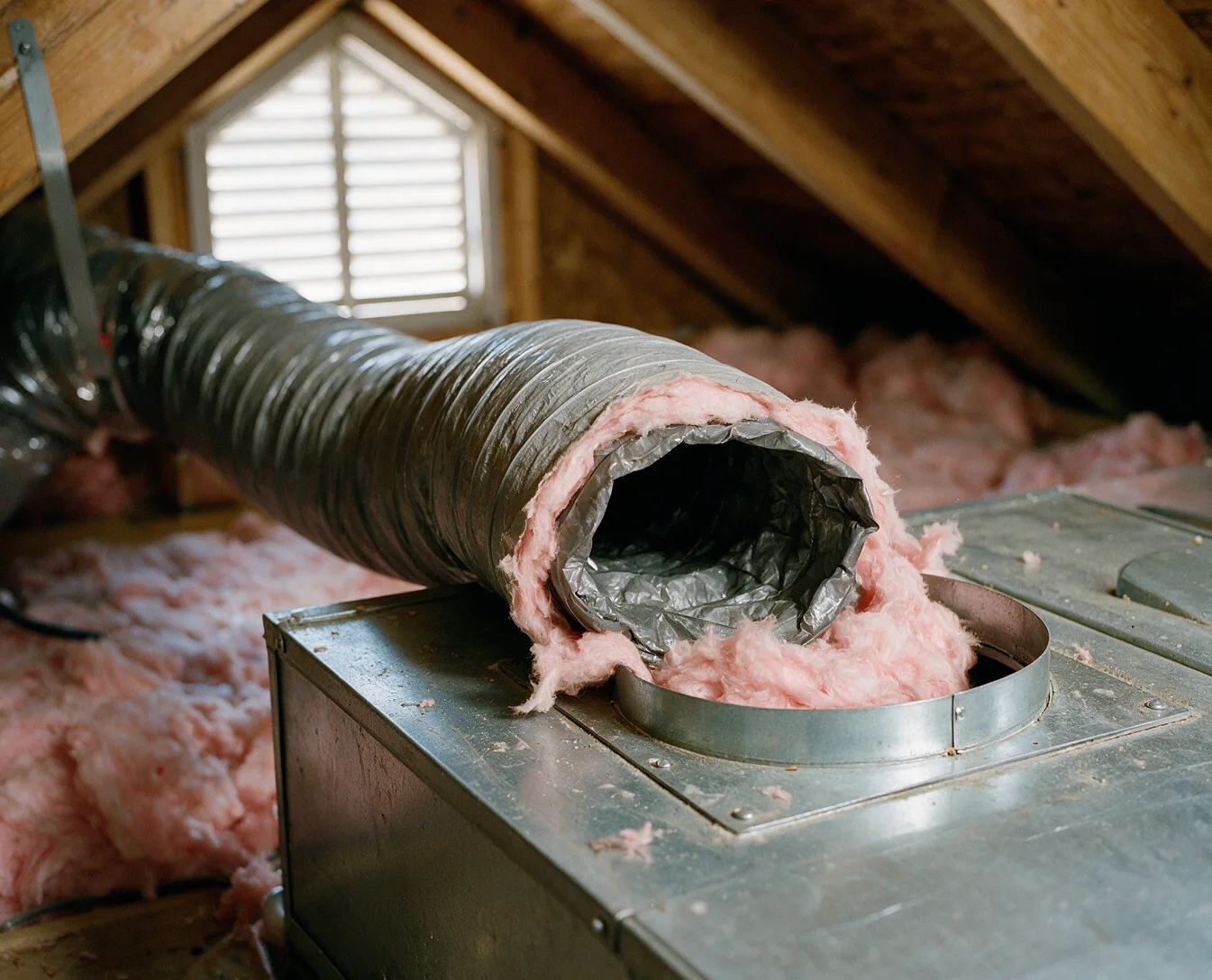
Warning Signs of Duct Problems
- Rooms at opposite ends of the house differ by more than a few degrees
- Dust appears on supply registers shortly after filter changes
- The air handler runs continuously yet the house never reaches set temperature
- Musty or stale odors come from vents when the system starts
- Higher than normal utility bills with no change in thermostat settings
What Our Technicians Inspect
We attach a manometer to the supply and return plenums to record pressure drops across each section. Readings above 0.5 inches water column on the supply side point to restrictions or leaks downstream. Visual checks follow using a camera snake through accessible runs.
Technicians also check insulation R-value and look for condensation stains on duct exteriors. These signs show where conditioned air is escaping and pulling attic or crawl-space air back into the system.
Filter condition and blower wheel cleanliness are recorded because restricted return airflow can mimic duct leaks on pressure readings.
Common Repair Approaches
Small gaps at sheet-metal joints receive mastic sealant and mesh tape rather than standard duct tape, which fails quickly. Larger separations require new sheet-metal collars or full trunk replacement.
Flexible duct runs that have collapsed receive new sections cut to the original length with proper supports every four feet. We never stretch flex duct tight because that reduces airflow.
When insulation has fallen off, we wrap affected runs with new R-8 material and secure it with UL-listed tape so the duct surface stays above dew point.
Materials and Parts We Use
Sheet-metal elbows and straight runs are 26-gauge galvanized steel. We fasten them with sheet-metal screws then seal every joint with water-based mastic.
Flexible duct is R-8 insulated with a metalized vapor barrier. Take-offs from the main trunk use adjustable dampers so airflow can be balanced after repairs finish.
Registers and boots are replaced only when the original size no longer matches the repaired duct opening or when rust has reduced the free area.
What Homeowners Can Check First
Replace the air filter if it is more than thirty days old. A dirty filter raises system pressure and can make small duct leaks appear worse on a gauge.
Walk through the house and note which rooms feel cooler or warmer than the others. Write down those locations so our technicians can start testing at the closest duct runs.
Turn the system off and listen near the air handler for whistling sounds when the blower starts. That noise often comes from a disconnected or torn flex connection.
Ductwork Repair questions
How long does typical Ductwork Repair take?
Most residential repairs finish in one day. Technicians isolate the leaking sections, seal or replace them, then retest static pressure before leaving. Larger trunk replacements may require a second visit to finish insulation and balance dampers.
Can homeowners seal ducts themselves?
Homeowners can safely replace filters and tighten visible screws on accessible boots. Any work inside walls, attics, or crawl spaces should be left to technicians who have the proper tools to measure airflow before and after repairs.
Will Ductwork Repair improve energy use?
Sealing leaks reduces the amount of conditioned air lost to unconditioned spaces. The blower no longer compensates for that loss, so runtime drops and the equipment cycles more normally once pressure readings return to the design range.
What happens if ducts are left unrepaired?
Continued leakage pulls dust and humidity into the system, which loads the filter faster and can cause the evaporator coil to ice. The furnace or heat pump also runs longer, raising operating costs and shortening equipment life.
Schedule Ductwork Repair
Call USA HVAC Pros to have technicians measure duct pressure and locate leaks in your system.